
Root Canal Treatment (Endodontics)
Removal of inflamed or damaged pulp tissue and filling of the canals to preserve the natural tooth.
Root canal treatment aims to keep the tooth functional without extraction in cases of severe pain, sensitivity, or infection. Modern techniques, rotary instruments, and advanced disinfection protocols significantly increase the success rate.
- Elimination of pain and infection
- Long-term preservation of the natural tooth
- Improved suitability for subsequent restorative/aesthetic treatments
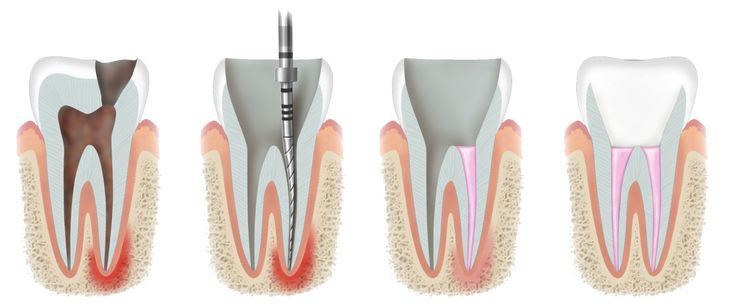
*Representative image.
Who Is It For?
- Patients with severe or persistent toothache
- Those with sensitivity to hot/cold
- Cases with gum abscess or swelling
- Teeth with pulp damage due to deep decay or trauma
Treatment Process
- Clinical examination and radiographic assessment
- Accessing, cleaning, and shaping the root canals
- Disinfection and filling of the canals
- Final restoration (filling, onlay, or crown)
Advantages
- An alternative to extraction—preserves the natural tooth
- Maintains function and aesthetics in the long term
- High success rates with modern techniques
Frequently Asked Questions
Is root canal treatment painful?
The procedure is performed under local anesthesia, so most patients feel no pain.
Mild sensitivity for a few days afterward is normal.
How many sessions are needed?
It can be completed in a single session depending on the case.
If infection is extensive or anatomical complexity is present, multiple sessions may be required.
Can the tooth break after treatment?
Root canal-treated teeth can become more brittle over time.
Therefore, a crown is recommended in many cases to prevent fractures.
How long does a root canal last?
With a well-performed root canal treatment and proper final restoration,
the tooth can function for many years.
Regular check-ups help extend its lifespan.