
Dental Fillings
Repair of decayed, fractured, or worn tooth structure using tooth-colored composite materials.
Composite fillings are aesthetic restorations that match the natural tooth color and preserve maximum healthy tissue. When necessary, porcelain inlay/onlay restorations produced in the laboratory can also be considered.
- Natural tooth-like appearance
- Usually completed in a single appointment
- Conservative approach: preserves healthy tooth structure
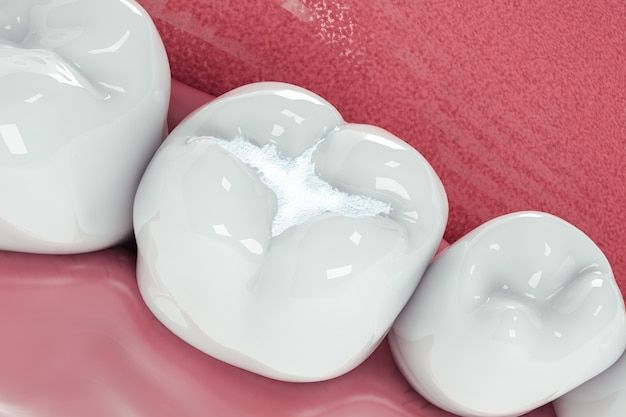
*Representative image.
Who Is It Suitable For?
- Early–moderate caries lesions
- Fractured or cracked teeth
- Cervical wear and sensitivity areas
- Cases where old fillings need aesthetic/functional renewal
Treatment Process
- Cleaning of decay/fractured tissue and cavity shaping
- Layering of composite material and light polymerization
- Checking contact points & bite, polishing and finishing
Advantages
- Tooth-colored, natural look
- Conservative restoration with minimal tissue removal
- Quick solution, usually in one visit
- Long-lasting with good care
Frequently Asked Questions
Are there alternatives to composite fillings?
Yes. Depending on the case, porcelain inlay/onlay restorations produced in the laboratory may be preferred.
Your dentist will recommend the best option based on decay depth, fracture size, and aesthetic needs.
How long does a filling last?
Longevity depends on habits, bruxism, oral hygiene, and the size of the filling.
With regular check-ups and proper care, composite fillings can last for many years.
Is sensitivity after a filling normal?
Mild hot–cold sensitivity may occur in the first few days and usually decreases quickly.
If discomfort persists or worsens, a follow-up evaluation is recommended.
Can every cavity be restored with a filling?
If decay reaches the pulp (nerve), root canal treatment may be required.
Your dentist will determine the best treatment based on clinical examination and radiographs.